

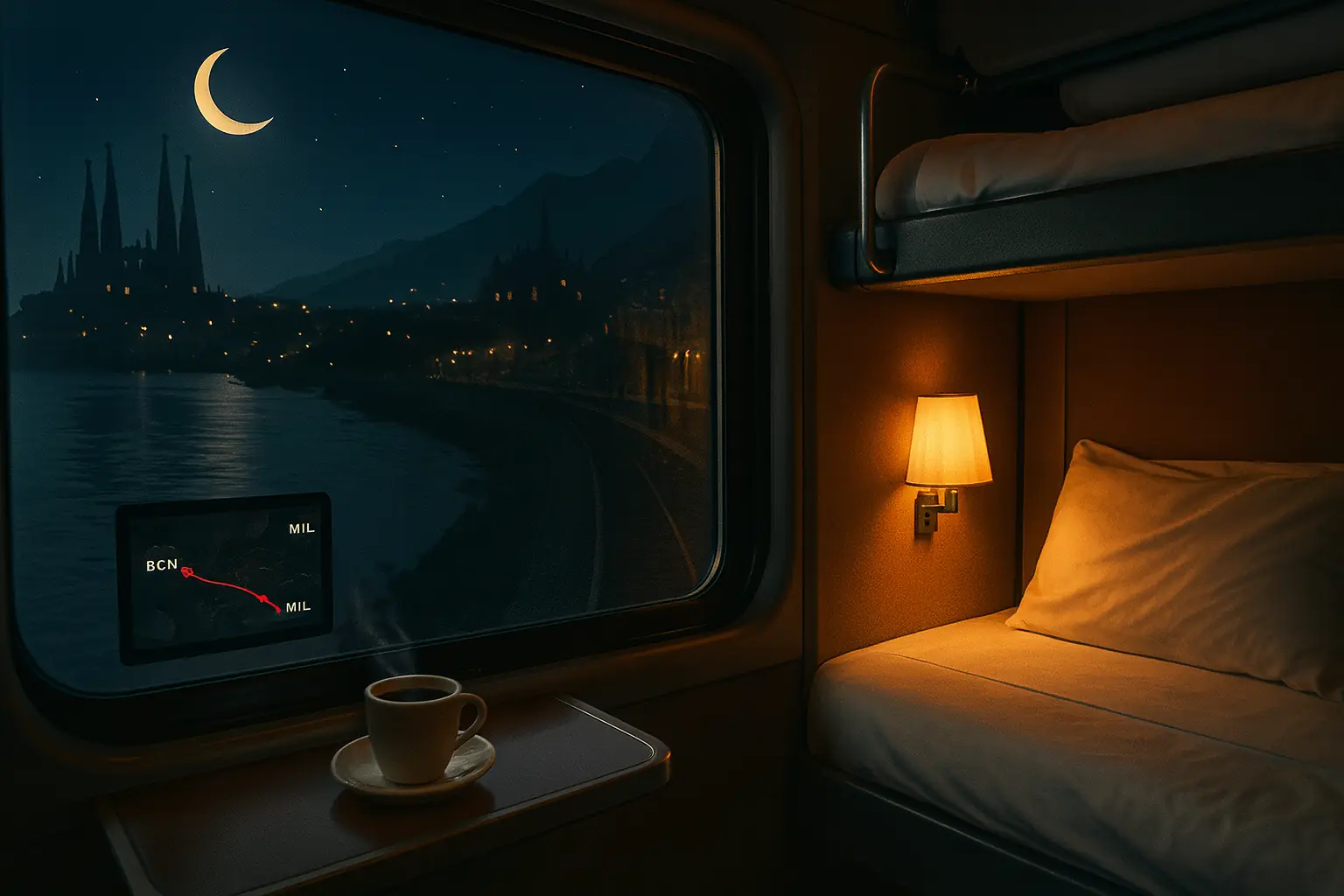
I like long train rides. Soft lights. A quiet book. That small thrill when the carriage rocks just enough to remind you that distance is shrinking by the minute. Barcelona to Milan works well if you want that feeling with a touch of adventure. There is no single direct night train most seasons, yet an overnight style trip is very possible with smart connections, couchettes, and a bit of play in your plan.
This is a friendly guide based on a real run I did in shoulder season. No stiff tone. Just steps that worked, where I felt calm, and where a tiny choice changed the mood from rush to relaxed.
The big picture: how the route usually works
The rail path from Barcelona to Milan runs through southern France or across the Riviera into northern Italy. Two broad strategies exist.
-
Evening departure then night segment
Leave Barcelona in the late afternoon or after work. Cross to France on a fast service. Sleep on a night segment with couchettes or a late TGV plus a dawn regional. Wake near Turin or Genoa. Glide into Milano Centrale with coffee in hand. -
Late night hop with early morning arrival
Take an evening train to a French hub such as Montpellier, Nîmes, or Marseille. Switch to a late service east. Catch a dawn regional at Ventimiglia or Savona. Roll into Milan before most cafes open.
Rail schedules shift by season. Some summers bring extra coastal services. Winters trim a few options. Aim for a plan that keeps total changes low and transfer windows kind. A single long segment for sleep plus one or two clean connections works best.
A small story from carriage 16
I boarded at Barcelona Sants with a light bag and a flat sandwich that looked sad but tasted perfect at nine. The platform smell was warm metal and soap. I fell into a window seat and watched the city peel away. A grandmother across the aisle shared almonds. She said she visits a cousin in Nice every autumn. Her tip was simple. Two thin layers beat one thick one because trains change temperature like cats change mood. I smiled and wore both. She was right.
At midnight a quiet conductor checked tickets without drama. I moved to my reserved couchette, folded the little ladder with a soft clack, and slept better than expected. Woke near dawn to a smear of pink sky and a station cat trotting along a fence. The air felt new. Coffee in a paper cup tasted like a reward. The last leg into Milan slid by vineyards and small towns that looked painted in chalk and honey.
Booking basics that save time
-
Search across multiple sites. Try Renfe for the Spanish leg and SNCF for France. Add Trenitalia for Italian segments. Rail Europe and Omio help you see combinations in one view if you prefer a simple cart.
-
Pick seats or couchettes early. Overnight segments can sell out on weekend dates and holidays. A lower berth helps if you wake often. Upper berth feels more private.
-
Carry digital copies. Some trains still print tickets, yet digital QR works more and more. Keep PDFs offline in case the signal fades.
-
Check platform habits. Barcelona Sants has passport checks only when needed. In Schengen you pass internal borders with routine ticket checks. Keep ID handy without stress.
You may also Like:
Couchette vs sleeper vs seat
-
Couchette is the easy middle. Four to six bunks in one compartment. Bedding simple and clean. Doors lock from inside. Enough for actual sleep if you bring earplugs.
-
Sleeper is private and quiet. More cost. Great for couples or anyone who needs a strong rest before meetings.
-
Reclining seat works for hard sleepers and short budgets. Bring a neck pillow and a hoodie. Plan a slow morning in Milan to recover.
Sample overnight plan that felt smooth
Here is a pattern that worked for me and still maps well to most timetables.
-
17:00–18:30 Barcelona Sants → Perpignan or Narbonne on a cross border service.
-
Evening Perpignan or Narbonne → Nice or Marseille on a TGV.
-
Late Switch to a night friendly segment east along the coast. You may find couchettes or a late service plus a dawn regional.
-
Morning Ventimiglia → Milano Centrale via regional or InterCity.
-
Arrive Milano Centrale between 09:00 and 11:00 with time for a pastry.
You can also route inland via Lyon and Turin. That version feels tidy and often faster, with fewer seaside views and more high speed track. Pick the one that matches your mood.
Packing for a kinder night
-
Soft backpack that tucks under the berth.
-
Two thin layers instead of one heavy jumper.
-
Eye mask and foam earplugs. Small, cheap, very useful.
-
Water and simple snacks with no strong smell.
-
Portable battery for phone and e-ticket peace.
-
Slip on shoes for corridor trips at night.
-
A spare T-shirt for a fresh morning before you hit Milan streets.
Food and coffee along the way
Cafes at Barcelona Sants serve quick bocadillos and espresso that hits fast. Many TGVs have a bar car for warm drinks and basic meals. French coastal stations sell croissants and quiches that taste better than they look under neon. In Italy you win the breakfast game. A small bar near the platform in Milan will hand you a hot cappuccino and a flaky pastry for less than your metro ride.
Why an overnight train beats a short flight sometimes
-
You skip airport lines and early alarms.
-
You sleep while moving, which feels like unlocking extra hours.
-
You step into the city center. Milano Centrale is close to trams and the yellow M3 line.
-
You see the map for real. Sea, hills, towns, dawn light. The path becomes a memory, not just a route code.
What to expect on arrival in Milan
Milano Centrale is grand and bright. Signage is clear. ATMs sit near exits. Metro machines speak English and tap to pay works. If you plan a same day hop to Lake Como, ride the green M2 one stop to Garibaldi or take a regional from Centrale. If you plan to walk, drop your bag in left luggage and head for a slow loop. I often aim for a first espresso near Via Turati, then a stroll to the Duomo before crowds fill the square.
Common hiccups and how to stay calm
-
Tight transfer. If a delay bites into your change window, stand near the doors for a faster exit and follow connection signs with purpose. Staff often hold a regional for a minute if many passengers are switching.
-
Quiet night but snoring neighbor. Earplugs plus white noise on low volume can save the night.
-
Bar car closed. Your water bottle and snack fix the mood.
-
Seats swapped. Use your reservation. Gently show the ticket and smile. Most issues vanish in seconds.
Budget notes
Prices dance with demand. Midweek dates sit lower. Summer and fashion weeks in Milan climb. Mix advance fares for long legs with flexible regional tickets for short hops. If you carry an Interrail or Eurail pass, layer reservations on top for TGVs and sleepers. It still comes out fair once you factor a saved hotel night.
Two micro itineraries you can copy
Coast lover version
Barcelona Sants → Perpignan → Nice Ville → Ventimiglia → Milano Centrale
More sea views. Small stations with that Riviera scent at dawn.
Fast and tidy version
Barcelona Sants → Lyon Part-Dieu → Torino Porta Susa → Milano Porta Garibaldi or Centrale
Higher speed feel. Big hubs. Smooth signs and platforms.
Final thought
Overnight rail is a small art. You build a plan with a few clean parts, then let the rhythm carry you. Barcelona fades with warm light. France slides by under stars. Italy greets you with a train hall that feels like a temple to movement. You step out, stretch, and feel like you have earned your first Milan coffee. That is the adventure.
You may also Like:
FAQs
Is there a direct night train from Barcelona to Milan?
Most seasons there is no single direct sleeper. You connect in France or on the Riviera and use a night-friendly segment to reach Italy by morning.
How long does the journey take?
Expect 12 to 15 hours door to door depending on route, season, and number of changes.
Seat, couchette, or sleeper for overnight?
Couchette balances price and rest. Sleeper adds privacy and comfort. A seat works only if you sleep well on moving chairs.
Where should I book?
Check Renfe for Spanish legs, SNCF for France, and Trenitalia for Italy. Aggregators like Rail Europe can combine tickets in one basket.
What about luggage and security?
Keep your bag close, use the compartment lock, and carry essentials in a small pouch. Standard Schengen checks apply on rail.
Any scenic seats to choose?
Window seats on the right side show more sea on parts of the Riviera. Inland routes give wide valley views near Turin.
What if a delay breaks my connection?
Station staff can reticket you to the next service. Build a buffer at the main change point and keep digital tickets ready.
