

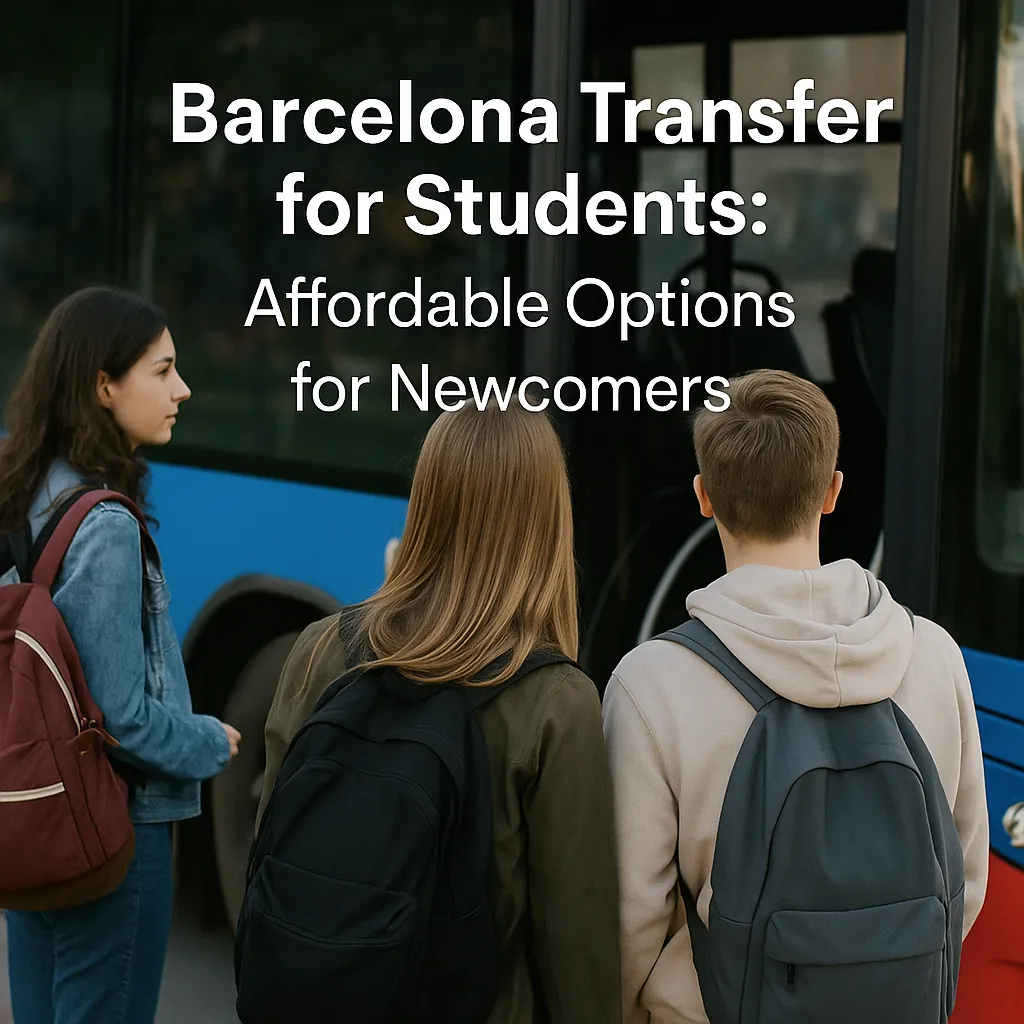
My first morning in Barcelona started with a small panic. I came out of El Prat airport with a heavy backpack one suitcase and zero idea where to go. Metro sign on one side. Bus sign on another side. A long line of black and yellow taxis in the sun. My brain kept asking the same question. Save money or save energy.
If you are a new student moving here that same feeling arrives very fast. So this guide is for that first week. Simple and honest. How to move around the city without killing your budget and still stay safe and comfortable.
Table of Contents
ToggleFirst question: what kind of student are you
Before talking about each transfer option, think a bit about your own situation.
-
Are you coming for one semester or a full degree
-
Are you staying close to the center or in a cheaper area far from metro
-
Are your classes early morning or more in the afternoon
-
Do you carry a lot of luggage or just a backpack
A student who stays in a hostel near Placa Catalunya for two months needs something different from someone who rents a room in Hospitalet for three years. Keep that in mind while reading the options.
You may also Like:
From Barcelona airport to the city on a student budget
1. Aerobus – good balance of price and comfort
Aerobus runs between the airport and Placa Catalunya with a few stops in between. You buy the ticket from the machine or the driver and then sit down with your luggage. Seats are decent and air con works fine and there is space for bags.
Price is higher than the regular city bus but still cheaper than taxi. For many students this feels like a sweet middle point. Less stress than the metro on that first day when you feel tired and confused.
2. Regular city bus – cheapest airport transfer
The night bus line N17 and day lines like 46 connect the airport with different parts of the city. Ticket price is the same as normal public transport and which makes it one of the most affordable options.
Downside is simple. The ride is slower and also more stops and less luggage space. If you have only one suitcase and you are not in a rush, this works well. For huge bags and three flights of stairs at your new flat, maybe think twice.
3. Train or Metro – fast if your area is near a station
Terminal 2 has a train that stops at places like Sants and Passeig de Gràcia. The metro line L9 Sud runs from both terminals and connects with other lines.
If your new home is close to Sants, Zona Universitària or another direct stop, this can save time. You roll your suitcase into the carriage, stand for a while and then move across the city without traffic. I used this option on my second trip and felt much calmer because I already knew a bit of the map.
Taxi and private transfer for students
4. Regular taxi from the airport
Taxis in Barcelona have a fixed range for airport rides. For a single student it can feel expensive. For two or three students sharing the back seat the price starts to look more friendly.
The real value of taxi on arrival day is mental. No thinking about lines or ticket machines. Driver drops you at the door of your new building. If your flight lands late at night or you feel nervous and paying a bit more for that first ride can make sense. After that first week you can go back to cheaper options.
5. Pre booked student transfer
Some local companies offer pre booked airport transfers. You pay online, the driver waits with a small sign and sometimes they already know the address of your residence or campus. For groups of international students this works very well.
I once helped a friend who arrived with two big suitcases and a guitar. We booked a private transfer together. The driver spoke simple English, gave a few local tips and dropped us right in front of the student flat in Gràcia. For him it felt like a soft landing in a new lifeand not a stressful puzzle.
Daily transport in Barcelona for students
Once you survive the airport and first taxi decision, the real question starts. How to move around every day without destroying your budget.
6. Travel cards and passes
Barcelona has a few different travel passes. Names change from time to time but the idea stays the same. Pay once and use metro, bus, tram and some trains inside your zones.
Students who stay long term usually choose a monthly or seasonal pass. The price looks high when you pay but when you count each trip the cost per ride becomes very low. You tap the card, door opens, no extra thinking.
Short term students or language course visitors sometimes prefer a multi trip card. You get a fixed number of rides and share with a friend if needed. That card helps in the first weeks when you are still learning how often you travel each day.
7. Metro and bus combo
Metro in Barcelona covers most student areas. Line 3 helps if you live near Universitat or Zona Universitària. Lines 1 and 5 touch many central spots where students work part time or go out.
Buses fill the gaps when the metro line stops far from your home. At first the bus map looks confusing but after a few rides you start to see patterns. I had one late class that finished when metro felt too crowded. Taking a quiet bus over Diagonal with music in my ears became part of the routine.
Extra ideas for saving money on transfers
8. Walk more in your first month
The center of Barcelona is not huge. Once you live here, you realise that a 25 minute walk can replace a metro ride. Use the first month to explore your surroundings on foot. You learn safe streets, cheap supermarkets and hidden shortcuts. At the same time you save a few euros every day.
9. Share rides when it makes sense
If a group of friends need to go home late at night from the beach or from a party in Poblenou, sharing a taxi sometimes costs almost the same as separate night buses plus waiting time. Just make sure everyone agrees on the price before starting the ride.
10. Mix transport with your study schedule
Look at your timetable and connect it with transport. Early morning class near Plaça Catalunya Maybe use metro to arrive fresh. Late afternoon study group in the same area Maybe walk back home with one friend. Simple habits like that help you stay in control of both time and money.
Small personal story
When I first came as a newcomer i tried to be heroic and use only the cheapest options. One hot day in August I carried a full bag of books from the library and decided to walk instead of taking the metro. Halfway up a long hill near Montjuïc my shirt was soaking and my energy was gone. I remember laughing at myself and finally jumping on a bus.
Since that day my rule is simple. Save money when your body feels fine. Spend a little more on transfers when you are very tired, sick or late for an exam. That balance keeps student life in Barcelona more human.
You may also Like:
FAQs: Barcelona Transfer for Students
Is taxi from Barcelona airport worth it for students?
Taxi can feel pricey for one person. For two or three students sharing, the price per person becomes more friendly. It makes special sense for late night arrivals or when you feel very nervous on your first day.
Which airport transfer is the cheapest for newcomers?
Regular city buses and some multi trip travel cards usually give the lowest price per ride. They are slower than Aerobus or taxi but perfect for students who travel light and have time.
Can students rely only on metro in Barcelona?
Many student areas sit close to metro lines, so metro alone can cover most days. Still, buses help a lot for late nights or for neighborhoods on hills. A travel pass that covers both metro and bus is the most flexible option.
Is Barcelona safe for student transfers at night?
Main metro lines and busy streets stay active until late. Night buses run through the city. As always, use common sense. Stay in lit areas, keep phone and wallet close and listen to your feeling. If a place feels strange, change route or use a taxi.
How soon should I buy a monthly travel pass?
Some students buy it on day one and feel happy. Others wait one or two weeks to see how often they move around. A good idea is to track your rides in the first days, then decide if a pass makes financial sense for your style.
If you treat transport as part of the experience, not only as a problem, Barcelona becomes much easier. From that first confused step at El Prat to your daily ride to campus, every transfer is one more small piece of your new student life by the Mediterranean.
