

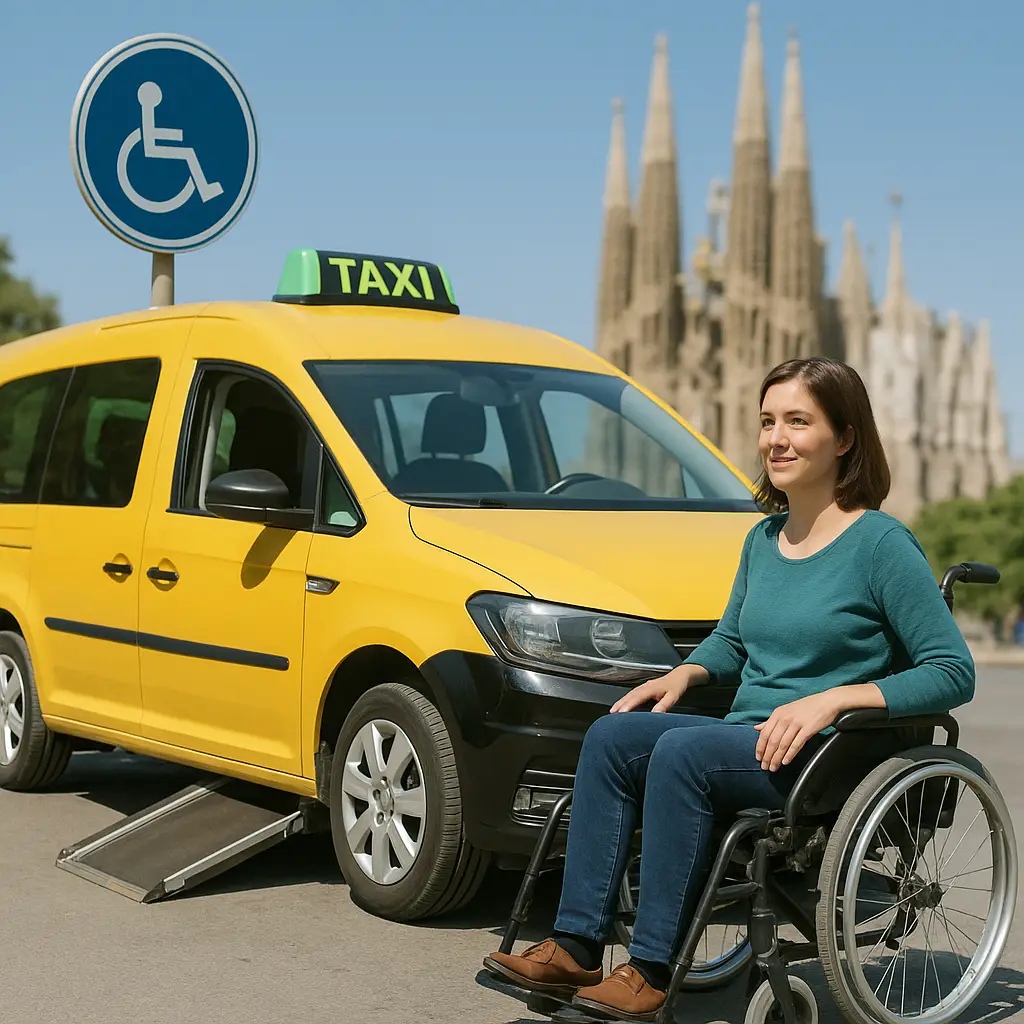
So here’s the thing. When I first got off the plane in Barcelona, I honestly had no clue how getting around was going to be. You hear people rave about the city being all vibrant and colorful with those wild Gaudi buildings twisting everywhere, tapas bars tucked into every corner, and the beaches that feel like they never end. And yeah, it really is all of that. But when you are actually there, wheels on the ground so to speak, the question hits—how easy is it really to move around?
But if you use a wheelchair or even just struggle with mobility, you know how quickly the fun part of a trip can turn into logistics stress.
Before going, I did that late-night Google search spiral: “wheelchair accessibility Barcelona” “how to get a taxi with a ramp” “is the metro any good if you can’t do stairs”… you know the drill. Some stuff online made it sound like a dream, some made it sound like an absolute headache. Honestly, I wasn’t sure what to expect.
But here’s the good news: taxis in Barcelona are actually one of the easiest ways to get around if you are disabled or traveling with someone who is. And I am not talking about just any taxi. I am talking about the EuroTaxis—these bigger, adapted vehicles with ramps or lifts that make life way easier.
My first experience with TAXXILO
I’ll tell you a quick story. The first night I tried one, I was staying near Plaça de Catalunya and wanted to see the Magic Fountain show at Montjuïc. Now, if you know the city, that’s not super far, but it involves metro changes and uphill paths. I was tired already (my feet were killing me even though I wasn’t the one in the chair, go figure), and I thought, “let’s try a taxi.”
I called for an accessible one, and the driver showed up in about 15 minutes. He came out, unfolded the ramp like it was nothing, and waved me on like “no worries, take your time.” The space inside was way bigger than I expected. Not like those moments when you squeeze into the back of a cab and think, well, this is going to be uncomfortable. No, it actually felt roomy and safe.
The best part? The driver started chatting about where to find the best cheap tapas (apparently not near Las Ramblas, which he said was “only for tourists”). It made the ride feel personal, like you’re getting advice from a local friend rather than just staring out the window. When we got to Montjuïc, he dropped us right at the entrance, which honestly saved us a lot of uphill pushing. Watching the fountain lights while knowing the ride back was sorted… highlight of the trip for sure.
How to actually book these taxis
Okay, so how do you get one of these TAXXILO Taxi in Barcelona? It is easier than it sounds, but here are the ways I figured out:
-
Call directly – Taxi companies have special numbers for accessible taxis. Some speak English, but sometimes it helps to have your hotel call for you.
-
Apps – The TAXXILO app, lets you choose an accessible vehicle. That’s what I used most often, and it worked fine.
-
Hotel reception – Seriously, the easiest option. Just ask at the front desk and they will call one for you.
One tip: if you have somewhere important to be (like the airport), book in advance. They are available, but not everywhere at every moment, so better safe than stuck.
Are they more expensive?
Nope. That was my biggest worry at first. But the TAXXILO cost the same as a regular taxi. You just pay by the meter. There might be the usual surcharges like for airport pick-up, but nothing extra just because it is accessible. That was a relief because in some places, “accessible” translates into “double the price,” which feels so unfair. Barcelona did this part right.
Accessibility around the city in general
Now, taxis aren’t the only way to get around. The metro has a bunch of accessible stations (not all though, so check before). Buses are actually pretty good too, most have ramps. But if you are like me and don’t always want the hassle of figuring out transfers or worrying if an elevator will be working, taxis are just simpler.
For attractions:
-
Sagrada Familia has ramps and elevators inside, and staff are actually helpful.
-
Park Güell has accessible areas, but some parts are tough with slopes.
-
Barceloneta Beach surprised me with accessible walkways that go onto the sand.
-
The Gothic Quarter… well, that’s still cobblestone chaos, so a taxi drop-off closer to your destination helps.
A couple of tips from my rides
-
Carry some cash just in case. Most taxis take cards, but a couple times the machine “wasn’t working.”
-
If you have a big power chair, mention that when booking. Some vans fit them fine, but it’s better the driver knows.
-
Traffic can be brutal at rush hour. My ride to the airport took almost an hour when I thought it would be 30 minutes. Always plan buffer time.
-
Drivers know stuff. Don’t be shy to ask them where to eat or what to avoid. One guy told me about a local bakery near Sants Station that I never would have found on my own.
My overall take
Traveling with a disability can sometimes feel like a series of battles, right? Stairs here, narrow doorways there, elevators broken when you really need them. But Barcelona gave me hope. The accessible taxis genuinely made the trip easier. I did not feel stuck. I did not feel like a burden. I just felt like a traveler enjoying the city.
Of course, Barcelona is not perfect. The Gothic Quarter is gorgeous but man those streets are so narrow and bumpy it feels like an obstacle course. Some of the older buildings too, you just kinda look at the entrance and think, nope, not happening today. But the thing that kept me from stressing too much was knowing I could always call one of those accessible taxis. It made such a difference. Like after a long night out eating tapas, or when I wanted to roll straight onto the beach without a sweaty uphill push, or that night I went up to Montjuïc for the fountain show—having that ride sorted made me feel way more free to actually enjoy myself.
If you are planning to visit Barcelona and need wheelchair accessibility, trust me on this: sort out how to call a EuroTaxi before you arrive, and you will thank yourself later.
FAQs – Taxi Barcelona for Disabled Travelers
1. Are EuroTaxis more expensive than regular taxis in Barcelona?
No, they charge the same rates as regular taxis.
2. Can I get an accessible taxi at Barcelona airport?
Yes. You can request one at the official taxi stand or pre-book to be safe.
3. Do taxi drivers know how to help with wheelchairs?
Yes, most of them are trained to handle ramps and secure the chair safely.
4. How many passengers can fit in a EuroTaxi?
Usually one wheelchair plus three or four other people, depending on the van size.
5. Can I use an app to book an accessible taxi?
Yes, apps like TAXXILO and Free Now let you select wheelchair accessible vehicles.
