And Barcelona taxis look easy from outside. Black and yellow car. Green light on top. Jump in. Say the address. Done.
Then the meter lights up and shows a tariff number and suddenly everything feels a bit more serious. Tariff 1. Tariff 2 And Tariff 3. The ride feels the same but the number changes. That is the moment most visitors start guessing. Some people assume it is random. Some people think the driver changed it. Usually it is neither. It is just how Barcelona taxi pricing works.
I remember my first proper taxi ride in Barcelona after a long day walking. Feet hurting. Phone battery low. I was near Passeig de Gracia and honestly I just wanted to sit down. The driver started the meter and I saw “T-1”. Cool. I paid and forgot about it.
Two nights later I took a taxi after dinner in El Born. Same kind of ride. Similar distance. Meter shows “T-2”. My brain immediately went into overthink mode. I stared at the screen like it was a secret code. The driver noticed and gave a quick explanation in simple words. Night rate. Weekend rate. That tiny moment made everything click.
So this guide is basically that explanation. Friend to friend style. No drama. Just clear.
What the tariff number actually means
A tariff is the official pricing mode the taxi meter uses. Barcelona taxis have regulated rates. The tariff number changes based on time of day and sometimes the day itself. It is not personal. It is not based on mood. And It is mostly the city rules.
The meter calculates the fare using a mix of:
-
a start amount
-
distance traveled
-
time when stuck in traffic or moving slowly
-
plus possible fixed supplements
The tariff decides which rate table the meter uses.
So when Tariff 1 changes to Tariff 2. It is basically the taxi saying “different official rate now”.
You may also Like:
Tariff 1 in Barcelona
When Tariff 1 is used
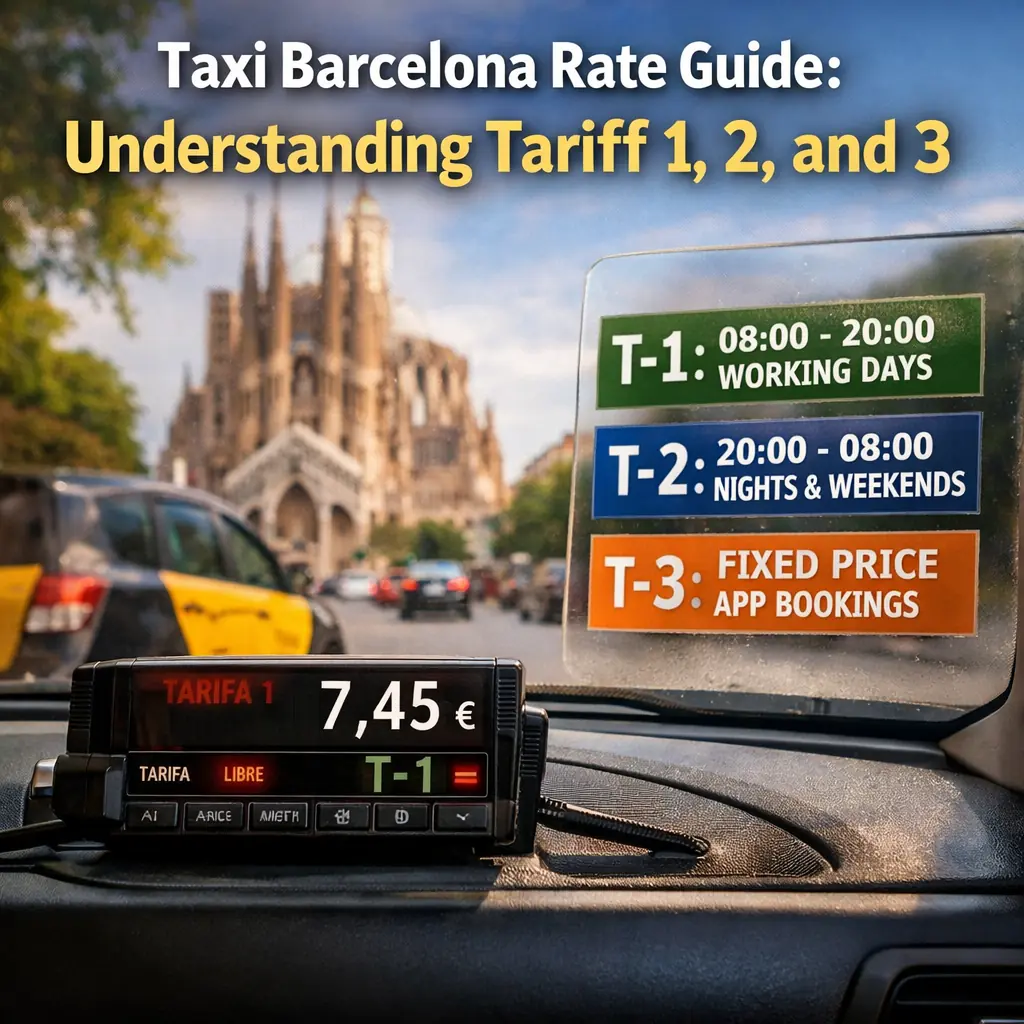
Tariff 1 is the normal weekday daytime rate. It usually applies Monday to Friday during daytime working hours.
In real life Tariff 1 shows up when:
-
heading to a museum in the afternoon
-
going from hotel to city center in the morning
-
running around for shopping in daylight
-
doing normal weekday rides
What Tariff 1 feels like
Tariff 1 is the calm default. If a trip is happening on a regular workday in the day. This is the one seen most often.
If Barcelona feels busy but still “normal busy” then Tariff 1 is usually on.
Tariff 2 in Barcelona
When Tariff 2 is used
Tariff 2 is the night and weekend vibe. It generally applies at night and also on weekends and public holidays.
Tariff 2 shows up when:
-
leaving a late dinner
-
going back to the hotel after a show
-
catching an early morning ride before sunrise
-
riding on a Saturday
-
riding on a holiday
Why Tariff 2 looks higher
It usually costs more because it is meant for non standard hours. Late nights can have fewer taxis available. The city uses a different rate table for those times.
Also night rides often include airport runs or tourist zones. That can add extra supplements. So the total can feel like it jumped.
It is not always a huge difference. It is just noticeable sometimes.
Tariff 3 in Barcelona
Tariff 3 is the one people talk about the most. Mostly because it sounds mysterious. It is not that scary.
What Tariff 3 usually means
Tariff 3 is commonly connected with pre set pricing for certain booked rides. This can happen with app bookings or specific regulated situations where the price is locked in before the ride starts.
So Tariff 3 can feel like “fixed fare mode” in practice.
When Tariff 3 might appear
-
rides booked through a taxi app that offers a fixed price option
-
special booking setups where the fare is agreed before pickup
-
certain specific travel situations depending on the system used
If the ride was booked and the price was shown upfront. Tariff 3 is often the reason.
Is Tariff 3 better
It depends.
Some people love fixed pricing because the final amount is known from the start. No second guessing in traffic. No stress.
Other people prefer the meter because it feels traditional and transparent. Especially for short trips in the city.
A simple approach is this. For long rides or airport rides fixed pricing can feel relaxing. For short city rides meter pricing feels fine.
The part that matters just as much: supplements
Even with the correct tariff the fare can still have extra items. These are called supplements. They are regulated too.
Supplements are fixed add ons for specific situations. Common examples are:
-
airport pickup or drop off supplements
-
cruise port pickup areas
-
large vehicle or special service in some cases
-
extra service details depending on official rules
That is why two rides with the same tariff can still end with different totals.
A small tip. At the end of the ride the receipt usually shows the breakdown. If there is confusion that paper clears it up fast.
How to spot the tariff in the taxi without making it awkward
No need to ask like an interview.
-
The meter usually shows T-1 T-2 or T-3 clearly
-
A tariff sticker is often placed inside the taxi with the official info
-
If an app booking shows a fixed price then Tariff 3 is likely involved
If the ride feels normal and the route makes sense. Usually everything is fine.
Personally I stopped stressing once I learned the pattern. Daytime weekday is Tariff 1. Nights and weekends are Tariff 2. Pre set booked pricing is often Tariff 3. Done.
Real examples that make it simple
Example 1: Monday 11:30 AM from Eixample to Sagrada Familia
Most likely Tariff 1. It is a weekday daytime ride.
Example 2: Friday 10:45 PM from El Born to Gracia
Most likely Tariff 2. It is night time.
Example 3: Saturday afternoon from Barceloneta to Plaça Catalunya
Often Tariff 2 because it is weekend.
Example 4: App booking with a fixed price shown before pickup
Often Tariff 3 since the fare is agreed in advance.
Example 5: Airport to city center at sunrise
Tariff 2 is common if it is still in the night window. Plus possible airport supplement.
Simple ways to avoid surprise costs
Travel in daytime when possible
If schedules allow. Daytime weekday rides usually stay on Tariff 1.
Check the app screen before confirming
If a fixed price is shown then that ride might use Tariff 3. That can be great. It just helps to know in advance.
Keep pickup locations simple
Some special pickup areas can trigger supplements. Airports and cruise terminals are common ones.
Be realistic about traffic
Traffic can change the total because time matters too. A short distance can still cost more if the road is stuck.
Tiny personal opinion
Barcelona is a city where walking is honestly the best. The streets feel alive. Even a boring route has something interesting. But taxis are a lifesaver when the legs are done or when it is late and the vibe changes.
One night I took a taxi from near the Gothic Quarter back to my place. Tariff 2 was on. The city looked shiny after a light rain. Streets quiet. Driver had soft music on. That ride felt worth it even if it cost a bit more than daytime. Sometimes comfort beats perfect budgeting.
You may also Like:
FAQs
What is Tariff 1 in Barcelona taxis?
Tariff 1 is the standard weekday daytime rate. It is common on working days during daytime hours.
What is Tariff 2 in Barcelona taxis?
Tariff 2 is the night weekend and holiday rate. It often appears at night plus weekends and public holidays.
What is Tariff 3 in Barcelona taxis?
Tariff 3 is often linked to booked rides with pre set pricing. It can show up with app bookings where the fare is agreed in advance.
Can a driver switch tariffs during a ride?
The tariff can change when the time window changes. For example a ride that crosses into night hours can move to Tariff 2 depending on how the meter rules apply.
Why did the fare feel high even on Tariff 1 ?
Supplements and traffic time can raise the total. Airport and cruise port areas can add fixed extras. Heavy traffic also adds time cost.
Is Tariff 2 always expensive?
Not always. The difference can be small on short rides. It becomes more noticeable on longer trips or when supplements are added.
How to confirm the tariff during the ride?
The meter shows the tariff number. A tariff sticker inside the taxi usually lists the official info too. A receipt at the end can show the breakdown.
Is it better to book a fixed price taxi or use the meter?
Fixed price can feel calmer for longer routes or airport rides. Meter rides feel fine for short city trips. Both can be good depending on the moment.