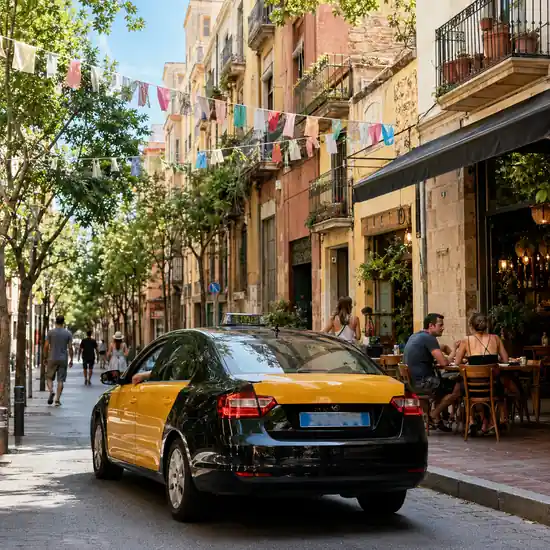
Gràcia is one of those Barcelona neighbourhoods that feels different the moment you enter it. The streets get narrower. The pace slows down. Big avenues disappear into small lanes, quiet squares, independent shops, old cafés, tapas bars, and little corners that feel more like a Catalan village than a busy city district. So lets discuss gracia barcelona transport guide in detail.
That is exactly why travellers love it.
But that is also why getting around Gràcia can be tricky.
On the map, Gràcia looks easy. It sits above Eixample, close to Passeig de Gràcia, not far from Park Güell, and connected to Barcelona’s metro system. But once you arrive, you realise something quickly. Gràcia is not built like the rest of central Barcelona. It is not a simple grid. Many streets are tight, one-way, pedestrian-heavy, or confusing if you are not local.
That is why this Gracia Barcelona transport guide focuses on the real question most visitors face: should you use the metro, walk, or take a taxi?
For many culture tourists, especially those visiting Gràcia’s plazas, restaurants, boutique hotels, design shops, or the famous Festa Major de Gràcia, a taxi is often the easiest and least stressful option.
Table of Contents
ToggleQuick Answer: What Is the Best Way to Get Around Gràcia?
The best way to reach Gràcia depends on where exactly you are going. The metro is useful if your destination is close to Fontana, Lesseps, or Diagonal. But for deeper parts of Vila de Gràcia, small hotels, restaurants, late-night plans, luggage, families, or Festa Major crowds, a taxi is usually more convenient because it gets you closer to the actual street or square.
Barcelona has around 10,000 yellow-and-black taxis and more than 300 taxi ranks across the city, and available taxis show a green light on the roof.
Why Gràcia Feels Like a Village Inside Barcelona
Gràcia was once a separate town before becoming part of Barcelona. That village feeling is still there today. Instead of huge tourist avenues, you get small plazas like Plaça del Sol, Plaça de la Vila de Gràcia, Plaça de la Virreina, and Plaça del Diamant.
The charm is real. You can walk from one square to another and feel like you are discovering Barcelona slowly, not rushing through it.
But from a transport point of view, this layout creates problems.
Many streets are narrow. Some are difficult for larger vehicles. Some routes do not allow easy straight-line movement. A place that looks “five minutes away” on a map can feel longer when you are carrying bags, walking uphill, crossing crowded plazas, or trying to find a specific restaurant at night.
That is where a taxi becomes useful. You do not always need it for the full visit, but it can save you from the most annoying part: arriving in the wrong place and walking through a maze.
Why the Metro Is Not Always Helpful in Gràcia
The Barcelona metro is excellent in many areas. But Gràcia is a little different.
The main metro line people think about for Gràcia is L3, the green line. Fontana and Lesseps are both L3 stations serving the area, and TMB lists both Fontana and Lesseps as stations on Line 3.
The problem is not that L3 is bad. The problem is that L3 does not always place you close to where you actually want to be in Gràcia.
For example, Fontana is helpful for Carrer Gran de Gràcia and nearby streets. Lesseps is useful for the upper side of Gràcia and routes toward Park Güell. Diagonal can work if you are coming from central Barcelona and walking upward into the neighbourhood.
But if your final stop is a restaurant near Plaça del Sol, a small guesthouse near Carrer de Verdi, a boutique near Travessera de Gràcia, or a festival street during August, the metro may still leave you with a walk through narrow lanes.
That walk is fine during the day with no luggage. It is less fun when it is late, hot, crowded, raining, or when you are travelling with kids.
Taxi vs Metro in Gràcia: Which One Is Better?
| Situation | Better Option | Why |
|---|---|---|
| Visiting Gràcia during the day with light bags | Metro + walking | Cheap and simple if your stop is near Fontana or Lesseps |
| Going to a specific restaurant or hotel | Taxi | Door-to-door is easier in narrow streets |
| Travelling with luggage | Taxi | Avoid stairs, station exits, and long walks |
| Visiting during Festa Major de Gràcia | Taxi to edge + walking | Crowds and street closures make metro exits busy |
| Late-night return after dinner | Taxi | Safer, faster, and less confusing |
| Family with children | Taxi | Less walking and fewer transfers |
| Older travellers | Taxi | More comfortable on uneven and busy streets |
| Going from airport to Gràcia | Taxi or private transfer | No need to change metro lines with bags |
Best Taxi Rank Locations Around Gràcia
If you want to take a taxi in Gràcia, you have a few practical areas to remember.
One official taxi rank listed by Barcelona city directory is at Carrer Gran de Gràcia, 81, in the Vila de Gràcia neighbourhood.
Other useful taxi pickup points around the district include larger streets and edge areas such as:
- Carrer Gran de Gràcia
- Travessera de Gràcia
- Passeig de Gràcia near Jardinets de Gràcia
- Lesseps area
- Diagonal / Gràcia border
- Near bigger hotels and main avenues
For tourists, the best strategy is simple. Do not try to find a taxi deep inside the smallest streets. Walk to a wider road or a known taxi rank. Taxis can move more easily there, and drivers can stop safely.
During busy evenings, it is better to pre-book instead of waiting at a rank.
When a Taxi Makes More Sense Than the Metro in Gràcia
1. When You Are Coming From Barcelona Airport
Airport to Gràcia by public transport is possible, but it is not the smoothest option if you have luggage. You may need airport metro or train connections, then another metro line, then a walk from Fontana, Lesseps, or Diagonal.
A taxi or private transfer is easier because you go directly from the airport to your hotel or apartment.
Barcelona’s official 2026 taxi fare page lists urban taxi fare details for the metropolitan area, including weekday and evening/weekend rates, airport supplements, and a minimum airport-origin journey charge.
For visitors staying in Gràcia, Taxxilo can be used for a direct airport pickup so you do not have to drag suitcases through metro stations or crowded streets.
2. When You Are Visiting Gràcia at Night
Gràcia is lovely at night. The squares are full of life, especially around Plaça del Sol and Plaça de la Vila de Gràcia. But late at night, the streets can feel confusing if it is your first visit.
A taxi is better when you want a simple ride back to your hotel, especially after dinner or drinks. You avoid checking metro times, walking to the right station, and changing lines.
3. When You Are Going to Carrer de Verdi
Carrer de Verdi is one of Gràcia’s most popular streets for independent cinema, restaurants, cafés, and local shops. It is also narrow and busy.
The metro gets you near the neighbourhood, but not always near your exact plan. A taxi can usually drop you closer to the nearest accessible point, then you walk the final short distance.
This is much easier than getting off at a metro stop and guessing your way through side streets.
4. When You Are Travelling With Kids
Gràcia is walkable, but not always stroller-friendly in the way tourists expect. Some streets are tight. Some plazas get busy. Some restaurants are tucked away in corners.
Families usually benefit from using taxis for arrival and departure, then walking inside the neighbourhood once they are relaxed.
5. When You Are Visiting Park Güell and Gràcia Together
Many tourists combine Park Güell with Gràcia. It sounds easy because they are close, but the area is hilly.
Lesseps can be useful for Park Güell access, but if your plan includes lunch or dinner in Gràcia afterwards, walking downhill or across the district can become tiring.
A taxi makes more sense if you want to move between Park Güell, central Gràcia, and your hotel without wasting energy.
Festa Major de Gràcia: When Taxis Become Essential
The biggest transport challenge in Gràcia happens in August during Festa Major de Gràcia.
This is one of Barcelona’s most famous neighbourhood festivals. Streets are decorated by residents, squares become social spaces, and visitors come from all over the city. In 2026, the festival is listed from 14 August to 20 August, with decorated streets and squares across the Gràcia quarter.
During Festa Major, the metro can get crowded, especially near Fontana and Lesseps. Streets may be busy or partially restricted. Taxis may not always be able to enter the smallest decorated areas, but they are still very useful for reaching the edge of the neighbourhood.
The smart plan is this:
Ask your taxi to drop you near a wider street such as Carrer Gran de Gràcia, Travessera de Gràcia, Diagonal, or Lesseps. Then walk into the festival area.
This avoids the worst part of the crowd while still getting you close.
For leaving at night, pre-booking is even more important. Everyone tries to leave at similar times, and taxi availability can become tight.
Best Times of Day to Use a Taxi in Gràcia
Morning
Morning is usually easier. If you are going from your hotel to Gràcia for breakfast, shopping, or a quiet walk, the taxi ride should be smoother than evening. This is a good time for families and older travellers.
Afternoon
Afternoon can be mixed. Traffic around Diagonal and Passeig de Gràcia may slow down. But if it is hot, a taxi still saves energy.
Evening
Evening is when taxis become more useful. Gràcia’s restaurants and squares fill up. Metro stations can feel busier. If you are dressed for dinner or travelling with someone who does not want to walk too much, taxi is the better choice.
Late Night
Late night is the strongest taxi use case. The metro may not match your exact route, and walking through unfamiliar narrow streets is not ideal for every traveller. A pre-booked ride gives you a cleaner exit.
Suggested Taxi Drop-Off Points for Gràcia
Because Gràcia has many narrow inner streets, the best drop-off point depends on your plan.
| Destination in Gràcia | Suggested Taxi Drop-Off Area |
|---|---|
| Plaça del Sol | Carrer Gran de Gràcia or Travessera de Gràcia side |
| Carrer de Verdi | Nearby accessible point on a wider street |
| Plaça de la Vila de Gràcia | Edge of Vila de Gràcia then short walk |
| Plaça de la Virreina | Drop nearby and walk final streets |
| Park Güell + Gràcia plan | Lesseps or upper Gràcia side |
| Festa Major decorated streets | Wider border streets then walk inside |
| Hotel near Gràcia | Direct hotel drop-off if street access allows |
A good taxi driver will usually know how close they can get without forcing the car into awkward streets.
How Much Does a Taxi to Gràcia Cost?
Taxi cost depends on where you start, the time of day, traffic, and whether any official supplements apply.
The 2026 metropolitan taxi fares list T-1 for working weekdays from 8:00 to 20:00 and T-2 for weekday evenings, Saturdays, and public holidays. T-1 shows €2.80 and €1.35/km, while T-2 shows €2.80 and €1.66/km.
As a practical tourist estimate:
| Route | Estimated Taxi Situation |
|---|---|
| Plaça Catalunya to Gràcia | Short city ride |
| Sagrada Família to Gràcia | Short to medium city ride |
| Barcelona Sants to Gràcia | Medium city ride |
| Barcelona Airport to Gràcia | Longer ride with airport supplement |
| Cruise Port to Gràcia | Medium to longer ride depending on traffic |
For airport rides, booking in advance with Taxxilo is usually better because you can arrange pickup clearly and avoid guessing with luggage after arrival.
How to Book a Taxi to Gràcia With Taxxilo
If you want a smoother arrival, you can book a taxi to Gràcia with Taxxilo before your trip.
This is especially useful for:
- Airport arrivals
- Hotel transfers
- Families with luggage
- Late-night returns
- Festa Major visits
- Travellers staying in apartments inside Gràcia
- Culture tourists visiting restaurants and plazas
A pre-booked ride helps you avoid waiting at a rank, explaining a narrow street location in a hurry, or walking too far from the metro.
Practical Tips for Tourists Visiting Gràcia by Taxi
First, save your exact address before entering the taxi. Gràcia has similar street names and small lanes, so it is better to show the driver the location on your phone.
Second, do not panic if the taxi stops slightly before your final point. In Gràcia, the closest legal and practical drop-off may be a short walk away.
Third, avoid planning tight schedules during Festa Major. The streets are part of the experience, but they also slow everything down.
Fourth, use taxis for the start and end of your visit, then explore Gràcia on foot. That is the best balance.
Fifth, if you are coming from the airport, book in advance. It keeps the arrival simple and gives you one less thing to think about.
Gràcia for Culture Tourists: Why Transport Planning Matters
Gràcia is not just a place to pass through. It is a neighbourhood where the experience comes from slow wandering.
You go there for independent shops, local squares, Catalan life, small restaurants, bars, cinema, architecture, and that relaxed village feeling that central Barcelona sometimes loses.
But culture tourists often make one mistake. They treat Gràcia like a simple metro stop.
It is better to treat it like a small district with many micro-areas. Fontana, Lesseps, Verdi, Travessera de Gràcia, Plaça del Sol, and Park Güell side are not the same experience.
A taxi helps when your plan is specific. The metro helps when your plan is loose.
That is the real answer.
FAQs About Getting Around Gràcia Barcelona
Is Gràcia easy to reach by metro?
Yes, Gràcia is reachable by metro, especially through Fontana and Lesseps on L3. But the metro may still leave you with a walk depending on your exact destination.
Is a taxi better than the metro in Gràcia?
A taxi is better if you have luggage, children, late-night plans, restaurant reservations, or a hotel on a narrow street. The metro is better for budget travellers who do not mind walking.
Where can I find a taxi rank in Gràcia?
One official listed taxi rank is at Carrer Gran de Gràcia, 81. Wider streets like Gran de Gràcia, Travessera de Gràcia, and the Diagonal border are usually better places to find or meet taxis.
Is Gràcia good for tourists?
Yes, Gràcia is excellent for culture tourists. It has plazas, local restaurants, independent shops, and a less commercial feel than many central tourist areas.
Should I take a taxi during Festa Major de Gràcia?
Yes, especially for arrival and departure. During Festa Major, streets get crowded and some routes may be restricted. A taxi to the edge of Gràcia plus walking inside is usually the best option.
Can Taxxilo take me from Barcelona Airport to Gràcia?
Yes. Taxxilo is useful for airport transfers to Gràcia, especially if you want direct pickup, luggage support, and a smoother arrival without metro changes.